

Introduction
Choosing the best cooking oil for heart health is one of the simplest ways to support your overall well-being without making dramatic changes to your diet. While many people focus on reducing sugar or cutting back on processed foods, the type of oil used every day can also play a major role in maintaining a Best Cooking Oil for Heart Health heart. From frying vegetables to preparing salad dressings, cooking oils are part of almost every meal, making it important to choose one that provides nutritional benefits instead of unnecessary health risks.
Not all cooking oils are created equal. Some are rich in Best Cooking Oil for Heart Health unsaturated fats that help support Best Cooking Oil for Heart Health cholesterol levels, while others contain higher amounts of saturated fats that should be consumed in moderation. Understanding these differences allows you to make informed choices that fit both your cooking style and your health goals.
In this guide, you’ll learn what makes a cooking oil heart-friendly, explore some of the Best Cooking Oil for Heart Health options available, and discover practical tips for selecting and using oils in everyday cooking. Whether you’re preparing meals for yourself or your family, choosing the right oil can make a positive difference over time.
What Makes a Cooking Oil Good for Heart Health?
A heart-healthy cooking oil is generally one that contains a high amount of unsaturated fats, especially monounsaturated and polyunsaturated fats. These Best Cooking Oil for Heart Health fats can help support balanced cholesterol levels by reducing LDL, often referred to as “bad” cholesterol, while maintaining or improving HDL, the “good” cholesterol. This balance plays an important role in supporting cardiovascular health.
Another important factor is the oil’s natural nutrient content. Many Best Cooking Oil for Heart Health cooking oils contain vitamin E, antioxidants, and plant-based compounds that help protect the body’s cells from oxidative stress. These nutrients contribute to overall wellness and may support long-term heart Best Cooking Oil for Heart Health when included as part of a balanced diet.
The smoke point of an oil also matters. Oils that remain stable at higher temperatures are less likely to break down during cooking. Choosing an oil that matches your cooking method, whether sautéing, roasting, grilling, or making salad dressings, helps preserve both flavor and nutritional value.
Best Cooking Oil for Heart Health: Top Choices
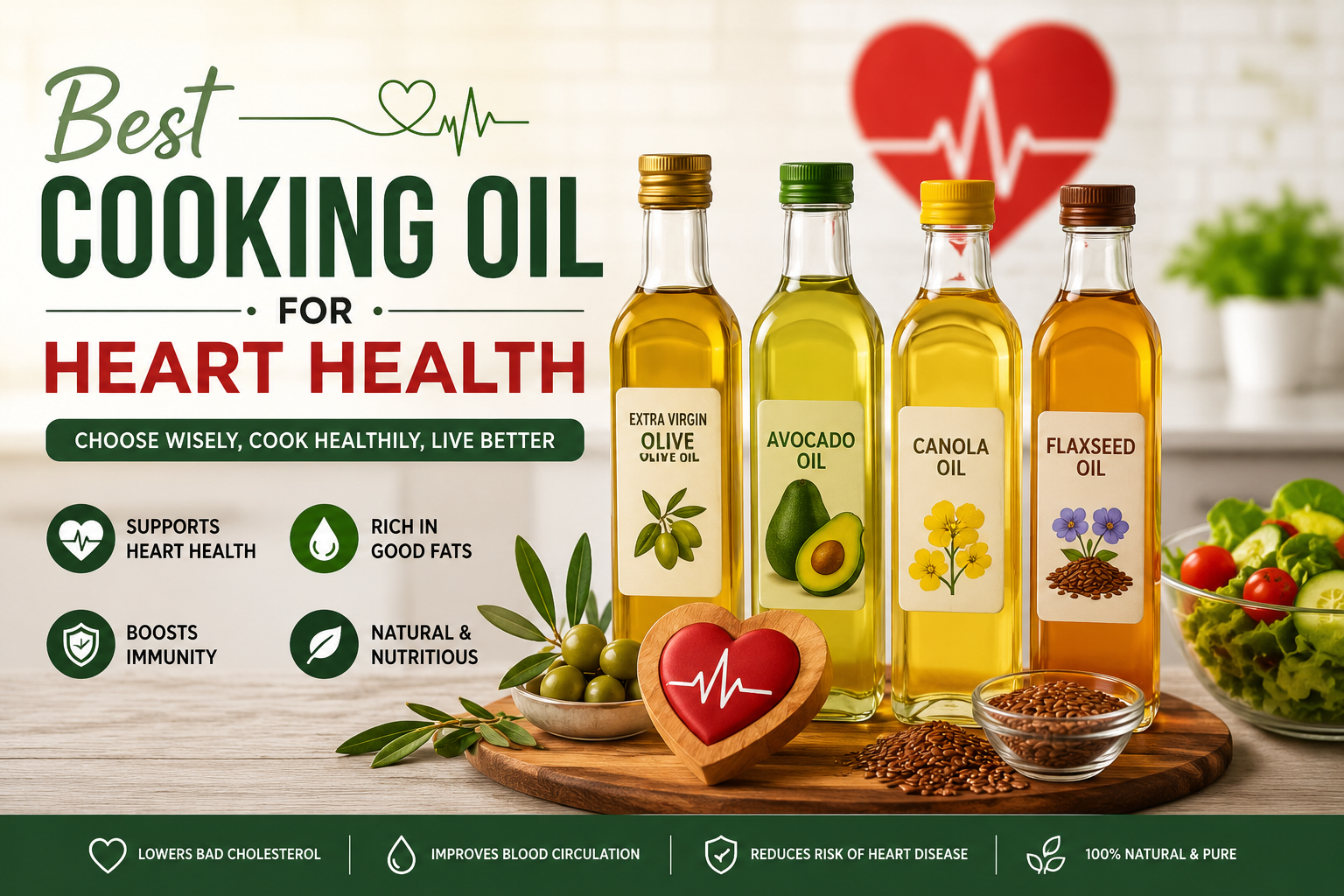
Extra virgin olive oil is widely considered one of the Best Cooking Oil for Heart Health cooking oils available. It is naturally rich in monounsaturated fats and antioxidants, making it an excellent option for everyday cooking. It works particularly well for light sautéing, drizzling over vegetables, and preparing homemade dressings. Its fresh flavor also enhances many dishes without requiring excessive seasoning.
Avocado oil is another excellent choice for people looking to support heart Best Cooking Oil for Heart Health. It offers a high concentration of monounsaturated fats while also having a naturally high smoke point. This makes it suitable for grilling, roasting, stir-frying, and other cooking methods that require higher temperatures. Its mild taste blends well with a variety of recipes.
Canola oil is often recommended because it contains relatively low saturated fat and a balanced mix of Best Cooking Oil for Heart Health unsaturated fats. It has a neutral flavor, making it useful for baking, frying, and general cooking. When used in moderation as part of a balanced diet, canola oil can be a practical and budget-friendly option for many households.
Oils That Should Be Used in Moderation
While some oils offer significant Best Cooking Oil for Heart Health benefits, others should be consumed more carefully. Coconut oil, for example, has become popular in recent years, but it contains a relatively high amount of saturated fat. Although it can fit into a balanced diet in moderate amounts, relying on it as your primary cooking oil may not be the best choice for Best Cooking Oil for Heart Health
Palm oil is another example that should be used thoughtfully. While it is commonly found in processed foods and packaged snacks, frequent consumption may increase saturated fat intake. Choosing fresh, minimally processed foods prepared with healthier oils is generally a better long-term approach.
Butter and animal fats are also higher in saturated fats compared to many plant-based oils. This does not necessarily mean they must be completely avoided, but using them occasionally instead of daily can help create a healthier balance. Small changes in cooking habits often add up to meaningful health improvements over time.
How to Choose the Right Oil for Different Cooking Methods
Selecting the right oil depends not only on its nutritional profile but also on how you plan to cook. For salads and cold dishes, extra virgin olive oil is an excellent choice because its rich flavor and natural antioxidants remain intact without heating. It adds freshness and depth to vegetables, grains, and homemade sauces.
For medium-heat cooking, oils such as olive oil and canola oil perform well while maintaining their nutritional qualities. They are suitable for sautéing vegetables, cooking lean proteins, and preparing many everyday meals without overpowering the ingredients.
When cooking at high temperatures, avocado oil becomes one of the best choices because of its impressive smoke point. It stays stable during roasting, grilling, and stir-frying, making it both practical and nutritious. Matching the oil to the cooking method helps preserve flavor while supporting healthy meal preparation.
Tips for Using Heart-Healthy Oils Every Day
Using healthy oils effectively is about balance rather than quantity. Even the healthiest oils are calorie-dense, so moderate portions are important. Measuring oil instead of pouring directly from the bottle helps prevent accidental overuse while still providing excellent flavor and nutritional benefits.
Proper storage also matters. Many cooking oils stay fresher when kept in a cool, dark place away from direct sunlight and heat. Exposure to light and air can gradually reduce quality and affect taste. Keeping bottles tightly sealed helps preserve freshness for longer.
Variety can also be beneficial. Instead of relying on a single oil for every recipe, consider using different oils based on your cooking needs. Olive oil for salads, avocado oil for high-heat cooking, and canola oil for baking create a flexible approach that combines nutrition, taste, and convenience.
Common Myths About Cooking Oils
One common myth is that all fats are unhealthy. In reality, the body needs healthy fats to support essential functions, including hormone production, brain health, and nutrient absorption. The key is choosing healthier sources of fat rather than eliminating fat completely.
Another misconception is that expensive oils are automatically healthier. Price alone does not determine nutritional value. Reading labels, understanding the type of fat an oil contains, and selecting minimally processed options are far more important than choosing the most expensive bottle on the shelf.
Many people also believe that one cooking oil is perfect for every recipe. In practice, different oils have different strengths depending on their flavor, smoke point, and nutritional profile. Using the right oil for the right purpose often produces both healthier meals and better cooking results.
Conclusion
Finding the best cooking oil for heart health does not have to be complicated. Oils rich in unsaturated fats, such as extra virgin olive oil, avocado oil, and canola oil, provide excellent options for everyday cooking while supporting a heart-conscious lifestyle. Choosing these oils more often can contribute to healthier eating habits without sacrificing flavor or versatility.
Healthy eating is built on consistent daily choices rather than quick fixes. Along with a balanced diet that includes fruits, vegetables, whole grains, lean proteins, and regular physical activity, selecting the right cooking oil becomes another simple step toward better cardiovascular wellness. Small improvements in your kitchen can have lasting benefits over time.
Ultimately, the best cooking oil is one that fits your nutritional needs, complements your cooking style, and encourages you to prepare wholesome meals more often. By understanding the qualities of different oils and using them appropriately, you can enjoy delicious food while making choices that support your heart for years to come.
You May Also Read: BYD Seagull

